Winter work across Canada and the northern U.S. is its own kind of job. Long shifts, short days, and wind that finds every gap in your gear.
Staying warm matters. Staying protected matters just as much. The good news is you don't have to trade one for the other. Knowing how to layer FR clothing for winter gives you both, and lets you adjust as the day changes.
Why does layering beat one big jacket?
One heavy coat sounds simple, but work isn't steady. You climb, you haul, you stand and wait, then you get moving again. Layers let you match your clothing to what your body is doing. Add one when you stop, open one up when you're working hard.
Layers also trap air between them, and trapped air is a great insulator. That helps keep you warm, and when FR garments are tested together as a combination, it can add to your protection too.
What goes into a winter FR layering system?
A base layer that keeps you dry
Everything starts next to skin. In winter, your base layer's main job is moving sweat away from your body. Sweat that sits on your skin cools you down fast once you stop moving, so a moisture-wicking FR base layer keeps the rest of your system working. FLEXSAFE™ is light and stretchy for active days, and TRANSMISSION™ brings a super soft double knit that feels great next to skin through the colder months. You'll find the rest in our FR base layer collection.
A mid layer that holds the warmth
This is your insulation. An FR work shirt with an FR hoodie or fleece on top holds in heat, and it's easy to pull off when you warm up. Our BLOCKER™ fleece hoodies are a crew favourite here.
An outer layer that handles the weather
Your outer layer takes on the wind, snow, and freezing rain. It should be FR, and it should breathe well enough to let moisture from inside escape. For your legs, FR bibs and overalls add warmth where work pants alone can't keep up. On wet days, our post on FR rainwear covers what to look for.
Does every layer need to be FR?
When you're layering FR clothing for winter, every piece in the stack counts. A non-FR layer can ignite or melt, whether it's on top or underneath, so keep the whole system FR from skin to shell.
If you're relying on layers to reach a certain arc rating, stick with combinations that have been tested together. Our layering calculator shows you tested combinations so you're never guessing.
How do you stay warm without overheating?
Start your shift a little on the cool side. You'll warm up quickly once you're moving. Open up or remove a layer before sweat builds, then put it back on during breaks. A dry spare base layer in the truck is a great backup on long days.
Cold stress isn't only a January thing, either. Cool, damp, windy days can pull heat from you faster than you'd expect. If you notice shivering, numb fingers, or feeling unusually worn out, take a warm-up break. And don't forget the places that get cold first, like your head, neck, and hands.
What's a good FR winter jacket to finish the system?
For your outer layer, we'd point you to the MWG STORMSHIELD™ Men's FR Parka Jacket. STORMSHIELD™ is an inherently flame-resistant ripstop fabric that's waterproof and windproof, so it stands up to snow, sleet, and wind all shift long. The kit pairs the parka shell with a liner, either a cozy BLOCKER™ fleece hoodie or the quilted FR Cooler Jacket. Wear both on the coldest days and just the shell when the weather eases up. Silver reflective striping on the torso and sleeves helps your crew see you when the days get short.
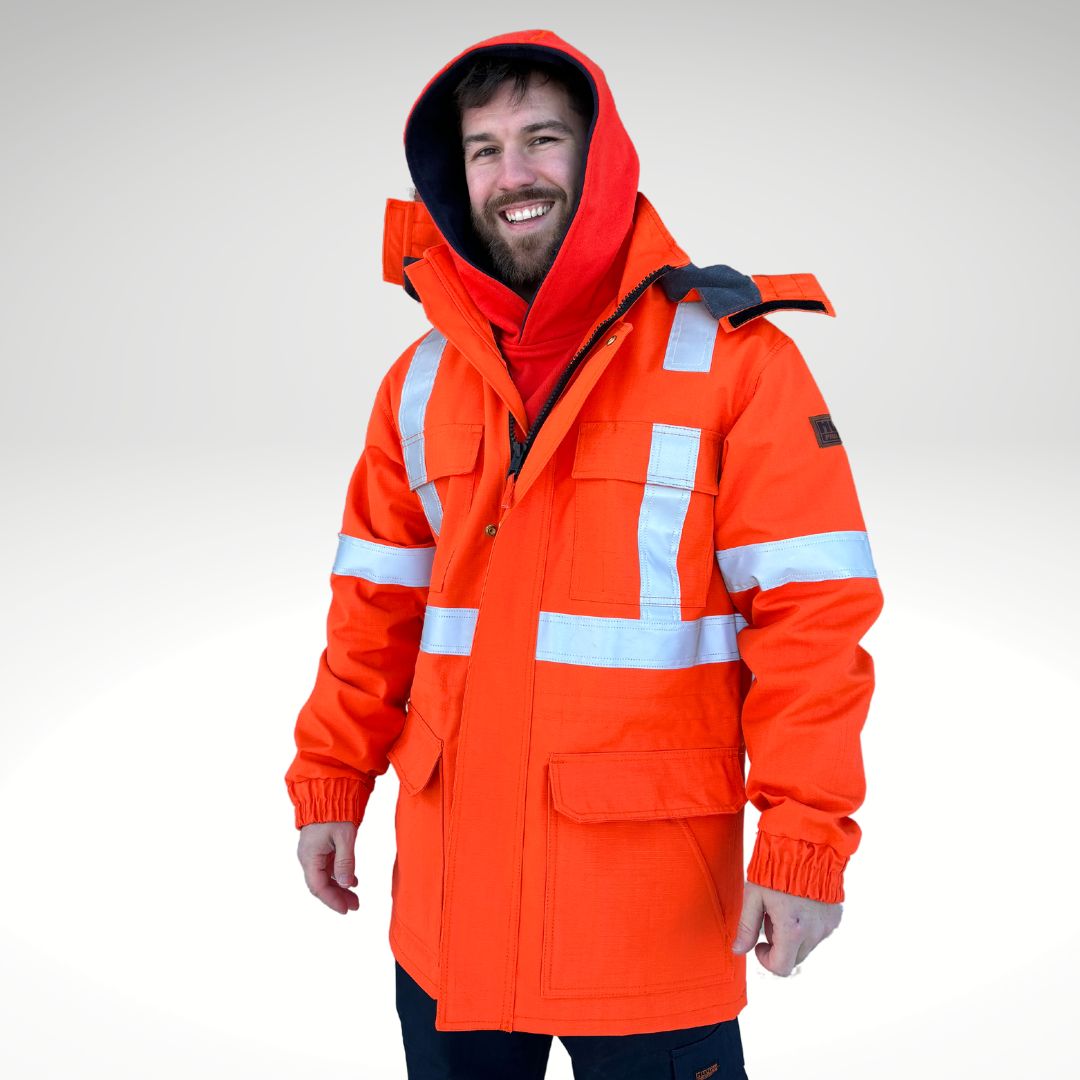
MWG STORMSHIELD™ Men's FR Parka Jacket
Prefer a shorter cut? The STORMSHIELD™ Bomber Jacket brings the same fabric in a bomber style. The STORMSHIELD™ Insulated Overall keeps your lower half covered, and women can shop fits made for them in our women's FR jackets.
Build your system once and adjust it all season long. If you're getting a crew ready for winter, talk to our team and we'll help you put together layers that work. You can also browse all of our FR outerwear.