To stay warm working outside in winter, keep your skin dry, cover your head and neck, block the wind, and take regular warm-up breaks with food and a hot drink. If your job calls for FR clothing, every one of those layers should be flame resistant too, from the piece next to your skin to the shell on top.
Cold is a lot easier to handle when your gear and your habits work together. Here's how crews across Canada stay comfortable from the first chilly morning to the spring thaw.
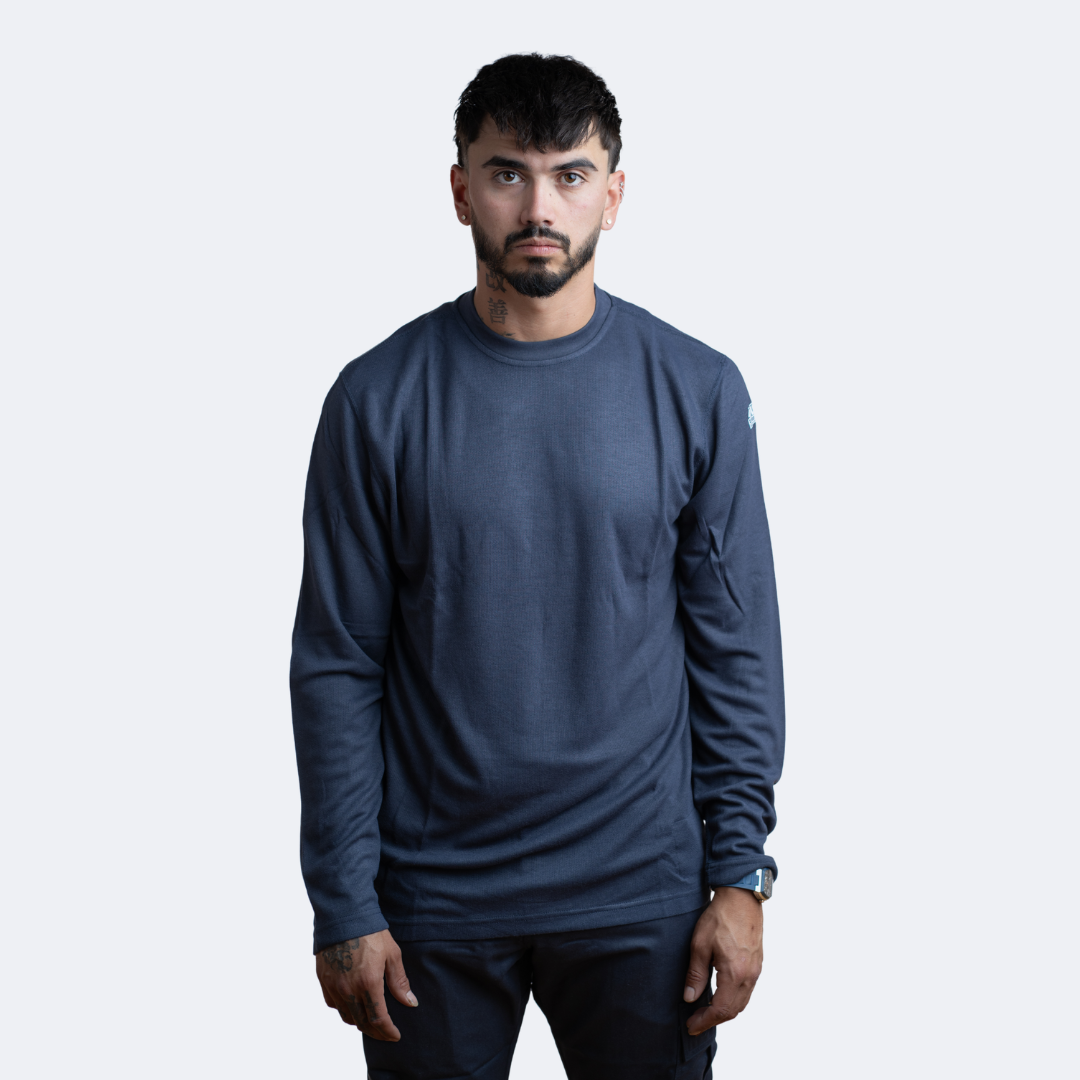
MWG TRANSMISSION™ Men's FR Crewneck, a winter weight layer that starts your day dry
Why does staying dry keep you warm?
Wet fabric pulls heat out of your body much faster than dry fabric. Even on a frigid day, hauling and climbing will work up a sweat, and that moisture turns cold the moment you stop moving. Keeping your skin dry is the foundation of everything else.
That's why your first layer matters so much. The MWG TRANSMISSION™ Men's FR Crewneck is a winter weight base layer made with our super soft TRANSMISSION™ double knit. It's inherently flame resistant, wicks moisture, dries quickly, and helps regulate your temperature as your work rate goes up and down. Flat lock seams keep it comfortable under your work shirt all day, and it carries a 9 cal arc rating at CAT 2.
Women can start with the FLEXSAFE™ Women's FR Long-Sleeve, a light, stretchy layer that moves with you. On long days, pack a second base layer and an extra pair of socks so you can change into something dry at lunch.
A dry base layer works best as part of a system you can open up as you warm. Our guide on how to layer FR clothing for winter walks through the rest, and our layering calculator shows tested combinations if you need layers to reach a certain arc rating.
What's the best way to keep your head and neck warm?
An uncovered head and neck lose heat quickly, and your face is one of the first places to get nipped by wind. A hard hat on its own doesn't do much to keep you warm, so add an FR layer underneath.
The TRANSMISSION™ FR Balaclava has a long neckline that tucks into your collar and fits under a hard hat. For more ideas, see our post on winter FR accessories.
How much does wind really matter?
A steady breeze can make a cold day feel much colder by stripping away the warm air around your body. A windproof outer layer keeps that warm air where it belongs.
Look for FR outerwear that blocks wind and sheds snow and freezing rain, with closures at the neck, wrists, and waist you can open when you warm up. Our post on which FR jacket keeps you warmest compares parkas, bombers, and liner kits, and our bibs vs coveralls guide covers your lower half.
Why do warm-up breaks make such a difference?
Your body burns more energy staying warm in the cold, so eat well and keep warm, sweet drinks on hand through the day. Step into a heated truck or shelter on a regular schedule, and follow your site's warm-up plan when temperatures drop.
Keep an eye on your crew, and let them keep an eye on you. Shivering, numb fingers, clumsiness, or someone acting confused or unusually tired are all signs to get warm right away and get help if things don't improve. Hypothermia can set in even without shivering, so don't wait for that signal. The Canadian Centre for Occupational Health and Safety has more on working safely in the cold.
Small habits add up over a long winter. If you're not sure your gear is ready for the season, our pre-winter checklist walks you through it, and you can browse the full TRANSMISSION™ collection for more cold weather layers.